


Showing posts with label Conservation. Show all posts
Showing posts with label Conservation. Show all posts
Protecting Deer by LEADer Mahalinga KS
 LEADer Mahalinga KS from Veershaiva College Bellary realized that in his region, there was a critical situation of deer being killed.
First, he and his team collected data through qualitative measures such as asking neighbouring people, exploring the areas where deer are found, and speaking with forest officials. They also collected any quantitative measures they could find, such as population numbers. It was a challenge collecting the first-hand data, as this involved going to the forested areas when the deers live in the hot summer months.
They then took all this data and compiled it, and gave it to the forest office, local government, and local police so they would better understand the situation of deers being killed. They also wanted to make sure that not only the authorities knew, but the people knew about the issues as well. They went around to villagers to distribute information and pamphlets, attempting to change the village mindset about deer killing.
The team got a good response from the villagers and authorities when they shared the information. They feel positive that their project has had a positive impact in changing how the villagers think about the deers, thus reducing the amount of deer killed in the region.
Conservation Camp: An Initiative of LEAD Sirsi Students
A group of students decided to build their consciousness of their surroundings and the value of the natural world in a unique way. LEader Ganapati Hegde (MES College of Commerce, Sirsi) initiated a 2-day camp in Kanmane, for this purpose, which 30 selected students participated in. The camp involved activities such as leadership activities, trucking, sessions on forest conservation and the relationship between nature and humans. A unique element of this camp was the exhibition of Karapatra, the old local newspapers in the time of freedom fighting. The resource person Mr. Shivand Kalve (freelance writer and conservationist) shared with the participants information about these old newspapers, and advised the students on initiatives they can take to save our natural world.


LEaders Talk About Not Wasting Food
Peering into the dustbins, Sneha Manerikar, and her partners Sushma, Reetu and Meenakshi
(UAS DWD) noticed that there was a great deal of food being wasted in the UAS Ladies Hostel in Dharwad. They felt it would be much better if this food would be conserved, or given to somebody else in need. To raise awareness of this issue, these LEaders compiled videos related to the importance of not wasting food, and presented them to aeveryone in the mess hall during lunch and dinner, so a great number of girls in the hostel would be informed about the issue.
Project: Krishihonda (Rainwater Harvest)
Nagaraj Naik (Govt First Grade College, Sirsi)
Rainwater harvesting is the conservation of rainwater to be reused for future needs. Nagaraj and people in his village of Karoor constructed a krishihonda to help harvest rainwater. 30 villagers benefitted from Nagaraj's project.

Rainwater harvesting is the conservation of rainwater to be reused for future needs. Nagaraj and people in his village of Karoor constructed a krishihonda to help harvest rainwater. 30 villagers benefitted from Nagaraj's project.

Project: Automatic Operated Water Pump
LEADer: Nitinkumar Meghannavar
College: KLS
Gogte Institute of Technology, Belgaum
Water plays a key role in human
life. In some areas, water get wasted from overflow of the overhead tank. This depleted both the water resource as well as energy resource. To overcome this the team made an attempt to conserve the resources. It is most useful for people of the
house, who face problems in switching on/off the pump at regular intervals of
time. The water pump can be installed in old age homes, hospitals, hotels, hostel, and
colleges. The team started the project with a proper
plan, sketch of the equipment and the list of raw materials required.
Convincing the residents of the house was a difficult task but after explaining
the importance of the project, they gave their support. The purchase of materials,
machining of materials and assembly were some of the activities done. But the
main problem was the switch (one of the part of equipment), which the team was not able to
find one that is suitable. To overcome this Nitinkumar and his team designed their own model and it worked, then after the installation of the equipment, they demonstrated it to
the residents. The moment when the pump automatically turrned off, everyone present
there was surprised and happy. They congratulated the team for their work. After the completion of this
project many of the team's neighbours and friends were
interested and ready to install it. As of now the team has seven orders from
places including Chikodi, Dandeli and Sulebhavi.


Project : Replacement of Cement
Leader : Neelambika
College : KLEIT
“Once, talking to my father, he said that through
industrial waste cement can be made. I’m learning civil engineering and even we
learnt a bit about it. When I got to know about LEAD I thought of taking this
as a project,” said Neelambika, a LEADer of KLEIT.
“Replacement of cement” : because of there
is more usage of cement it produces more waste. Industries also produce more
waste. Using all waste products green concrete is produced and it is also more
durable than normal concrete.
It helps in small
amount in reduction of environment pollution and the cost of production.
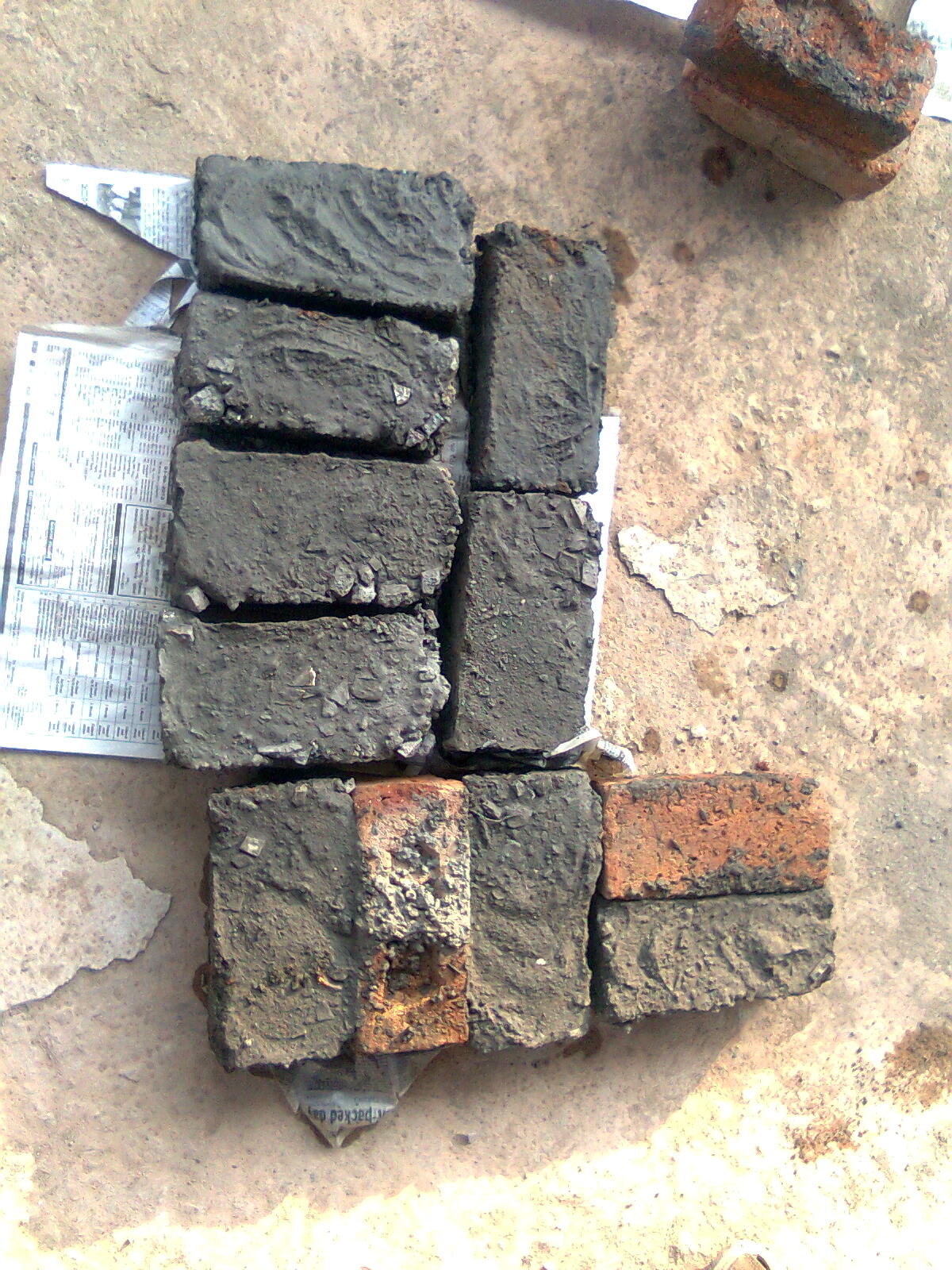
Neelambika wanted to make some blocks and
use them for sitting benches near the parking or canteen areas. In the process
she learnt the
effective usage of waste materials, and came to know the effort and pains of
employees who build the buildings.


Project: Seeds for Life
LEADer:
Sandesh Bhat
Location:
Chandragutti, Sirsi
We always talk about farmers facing lots of
trouble. But how many of us think about the reason of theproblem? In Sirsi LEADer
Sandesh Bhat found that the farmers have problems withthe conservation of
seeds. Sandesh conducted a project
called “Seeds For life” (conservation of Desi
rice seeds) in Chandragutti. 150 farmers participated and exchange their
knowledge and practice of conservation of seeds and their importance. Thus the
project created a huge impact on changing the perspective of the farmers
regarding seed conservation. In this program more than 40 varieties of seeds
has been introduced and received the attention of farmers.
.JPG)
.JPG)
.JPG)
Project: Tap Water
LEADer: Disha Bhat
Disha Bhat from BVBCET found that people
are wasting lot of water in Annageri
village. She came up with an idea that by using simple sensor technology
it would reduce the wastage of water. She and her team went to Annigeri village
and implemented this module for ten families.
She explained to the villagers how science is used in our daily life.
.jpg)
.jpg)
.jpg)
Project: Maglev Generator
Team LEADer: Atheeq
Location: REC College
The Maglev Generator works on two principles: magnetic levitation which
gives rise to the Maglev rotor of the generator, and induction which causes DC electricity generation.
The idea came to LEADer Atheeq when he saw a generator with a rotor that was wound very
tightly (more friction), which required more energy to produce power. This problems inspired him to create a frictionless rotor i.e. a Maglev Rotor, which uses less energy and produce more power to some extent when compared to normal generators. From these Maglev generators we can save fuel energy.
When batteries are connected circularly around the Maglev
rotor, because of opposite magnetic fields produced by the batteries the rotor starts
to rotate free with very high rpmm which sets the dc motor working. From this mechanical energy gets converted into electrical power which lights the LED.
Location: REC College
The Maglev Generator works on two principles: magnetic levitation which
gives rise to the Maglev rotor of the generator, and induction which causes DC electricity generation.
The idea came to LEADer Atheeq when he saw a generator with a rotor that was wound very
tightly (more friction), which required more energy to produce power. This problems inspired him to create a frictionless rotor i.e. a Maglev Rotor, which uses less energy and produce more power to some extent when compared to normal generators. From these Maglev generators we can save fuel energy.
When batteries are connected circularly around the Maglev
rotor, because of opposite magnetic fields produced by the batteries the rotor starts
to rotate free with very high rpmm which sets the dc motor working. From this mechanical energy gets converted into electrical power which lights the LED.


Project: Technology Transformation in Daily Life
LEADer: Soumya Hegde
Team Members: Priyanka, Mamata
Date: 25/2-7/3/2012
Location: Balgar
Soumya wanted to fix the problem of water wastage in his Balgar village using simple technology. He collected information on sensor technology and convinced 5 families to adopt this technology in their daily life. With the help of the electrician he fixed sensor equipment to the water machine. Since then, there is no wastage of water and the villagers are much appreciative.


Team Members: Priyanka, Mamata
Date: 25/2-7/3/2012
Location: Balgar
Soumya wanted to fix the problem of water wastage in his Balgar village using simple technology. He collected information on sensor technology and convinced 5 families to adopt this technology in their daily life. With the help of the electrician he fixed sensor equipment to the water machine. Since then, there is no wastage of water and the villagers are much appreciative.


Subscribe to:
Posts (Atom)


