


Showing posts with label Innovation. Show all posts
Showing posts with label Innovation. Show all posts
Belgaum LEADer Invents Low-Cost Grass Cutting Machine; Taps Into Inclusive Innovation
 We are all aware of the importance of innovation in today's society as a way of driving economies and communities forward. What is more important than innovation, though, is inclusive innovation. In other words, innovations can be truly successful only if they can be afforded and accessed by all sectors of society. With the principle of inclusive innovation in mind, LEADer Balchandra from Jain College, Belgaum, invented a simple and low-cost "Grass Cutting Machine". The machine can be constructed using the pedals and wheels of a bicycle. The cutter is connected to the back bicycle wheel using a rope. Through pedaling, the wheel is spun and grass can be inserted to the cutter to be cut.
Guest Speaker Session with Dr. Simone Ahuja
On July 20th, 2013, 70 LEAD and LEAD Leadership Program students attended a Skype guest speaker session with Dr. Simone Ahuja.
Dr. Ahuja is a co-author of Jugaad Innovation: Think Frugal, Be Flexible, Generate Breakthrough Growth. "Jugaad”, according to Dr. Ahuja, is a Hindi term that refers to “creating opportunity out of adversity”. Currently a non-fiction bestseller in India, Jugaad Innovation explores how emerging BRIC economies (Brazil, Russia, India, and China) are practicing a “jugaad” approach to innovation, and are able to address and capitalize on problems while utilizing fewer resources. “Jugaad innovation” is more flexible, economical, and in many ways more successful than the traditional, structured approach to innovation practiced by many developed economies.
Dr. Ahuja is also the founder of Blood Orange, a marketing and strategy advisory company that focuses on emerging markets. In the past, Dr. Ahuja served as a consultant to the Centre for India and Global Business at Judge Business School, University of Cambridge. Additionally, she regularly contributes to the Harvard Business Review.
Dr. Ahuja spoke to the students from the Minneapolis, Minnesota, US. During her presentation, Dr. Ahuja expanded on “jugaad innovation”, its benefits, and how to practice "jugaad innovation” successfully. Citing different examples such as the MittiCool Refrigerator designed by Mansukhbhai Prajapati, Dr. Ahuja illustrated how “jugaad innovation” has the potential to resolve many pressing problems and drive economies forward.
Following her presentation, LEAD students asked questions about how they can incorporate “jugaad innovation” into their LEAD projects and entrepreneurial journeys.
Dr. Ahuja’s session taught the students the importance of flexibility, creativity, and understanding communities while addressing problems and implementing solutions.
Dr. Ahuja is a co-author of Jugaad Innovation: Think Frugal, Be Flexible, Generate Breakthrough Growth. "Jugaad”, according to Dr. Ahuja, is a Hindi term that refers to “creating opportunity out of adversity”. Currently a non-fiction bestseller in India, Jugaad Innovation explores how emerging BRIC economies (Brazil, Russia, India, and China) are practicing a “jugaad” approach to innovation, and are able to address and capitalize on problems while utilizing fewer resources. “Jugaad innovation” is more flexible, economical, and in many ways more successful than the traditional, structured approach to innovation practiced by many developed economies.
Dr. Ahuja is also the founder of Blood Orange, a marketing and strategy advisory company that focuses on emerging markets. In the past, Dr. Ahuja served as a consultant to the Centre for India and Global Business at Judge Business School, University of Cambridge. Additionally, she regularly contributes to the Harvard Business Review.
Dr. Ahuja spoke to the students from the Minneapolis, Minnesota, US. During her presentation, Dr. Ahuja expanded on “jugaad innovation”, its benefits, and how to practice "jugaad innovation” successfully. Citing different examples such as the MittiCool Refrigerator designed by Mansukhbhai Prajapati, Dr. Ahuja illustrated how “jugaad innovation” has the potential to resolve many pressing problems and drive economies forward.
Following her presentation, LEAD students asked questions about how they can incorporate “jugaad innovation” into their LEAD projects and entrepreneurial journeys.
Dr. Ahuja’s session taught the students the importance of flexibility, creativity, and understanding communities while addressing problems and implementing solutions.
For more information on Dr. Simone Ahuja and Jugaad Innovation: Think Frugal, Be Flexible, Generate Breakthrough Growth, please visit http://jugaadinnovation.com/
Project: Gajari Clean-A New Way to Carrot Cleaning
Innovation aims to successfully increase productivity while using the least amount of resources.
Santosh has done exactly that. He hails from the village of Shedbal, near Belgaum, where most people work as vegetable farmers. Cleaning carrots after each harvest became a lengthy, and costly, process for the farmers. Additional laborers were required for peeling and cleaning the carrots that were harvested. Santosh designed a machine to help with this process. The machine uses the simple phenomena of centrifugal force and friction. With Santosh's machine, carrot cleaning only requires the help of one or two people, very limited water, and no electricity. Moreover, Santosh's machine allows 100 kg of carrots to be harvested, cleaned, and peeled in only 15 minutes. Eight farmers now use this machine and have spared the costs of employing six laborers.
Santosh's innovative carrot cleaning machine earned him the Best LEADer award in Yuva Summit 2013.

Santosh has done exactly that. He hails from the village of Shedbal, near Belgaum, where most people work as vegetable farmers. Cleaning carrots after each harvest became a lengthy, and costly, process for the farmers. Additional laborers were required for peeling and cleaning the carrots that were harvested. Santosh designed a machine to help with this process. The machine uses the simple phenomena of centrifugal force and friction. With Santosh's machine, carrot cleaning only requires the help of one or two people, very limited water, and no electricity. Moreover, Santosh's machine allows 100 kg of carrots to be harvested, cleaned, and peeled in only 15 minutes. Eight farmers now use this machine and have spared the costs of employing six laborers.
Santosh's innovative carrot cleaning machine earned him the Best LEADer award in Yuva Summit 2013.

Project: Redistributing Leftover Food
Sachidanand Murthy (Chetana College)
One day while watching TV, Sachidanand realized that there are a lot of marriages and weddings taking place throughout India. He also realized that there is usually a lot of food left over from weddings. Sachidanand thought to capitalize on this excess food and convert it into an opportunity. Sachidanand and his team visited the nearby choutry and convinced the caterer to hand over the left over food after the event. After the event, Sachidanand collected leftover rice, pickles, etc and served 20 hungry, orphaned girls in Harihar. Sachidanand's innovative approach allowed food to be recycled to feed those in need.
Project: Geyser Stove
Nihal N. Revankar (SDM, Dharwad)
 Most families use stoves to serve multiple purposes- to cook food, prepare beverages, heat water for bathing, etc. Nihal, therefore, designed a multi-purpose stove. Nihal’s stove contains a hollow, aluminum pipe around the flame. Water is heated when it passes through one end of the pipe, and hot water is collected at the other end. With Nihal’s stove, then, two tasks can be done at the same time. Nihal’s stove has been distributed to 8 families.
Project: Human Detecting Robot
Sujith Mahadi (SJMIT, Chitradurga)
Sujith is creating a robot to be used during war and natural disasters. The robot’s purpose will be to detect humans. Additionally, the robot will be equipped with a camera that will provide live feed of what is happening when the robot is being used. Sujith’s has been sponsored by Mahadi Yahama Motor Chitradurga.
Project: Solar Lamp
Omkar Tarle (KLECET)
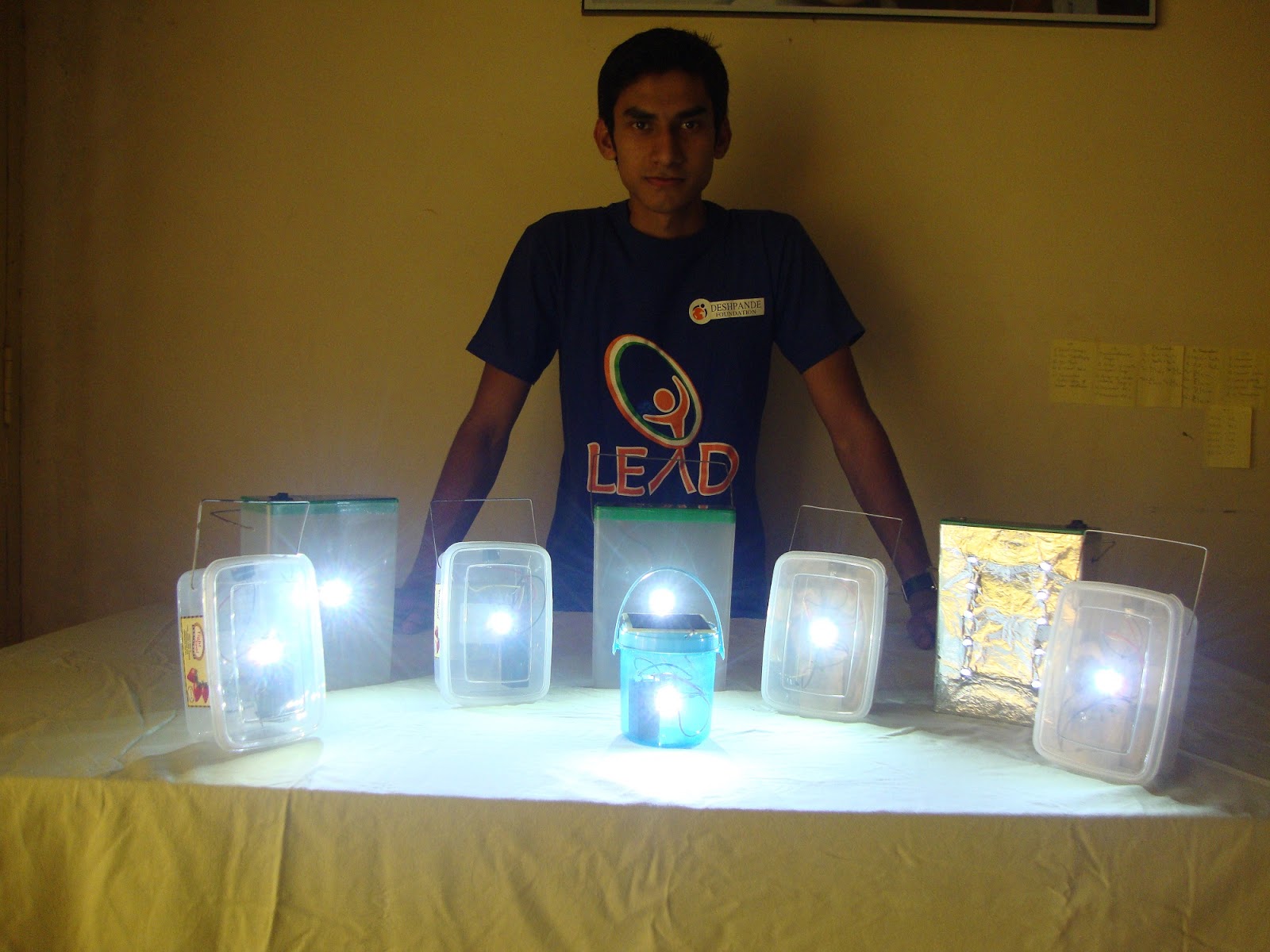
People in the village of Benali suffered from frequent power outages and therefore had little electricity to supply their homes. So, Omkar designed a solar powered lamp, which provides free light source to people affected by the power outages. The construction of the lamp was quite an undertaking-material had to be gathered from Belgaum as well as from Bangalore. Omkar distributed 20 solar lamps, and 150 people are benefitting from these lamps.

Project: Multi-Grass Cutting Machine
Sachin Bennalkar (Jain)
Sachin designed a machine that cuts grass, thereby reducing the labor for farmers. Sachin approached people asking for donations in order to fund the construction of the machine. After collecting the necessary funds and materials, Sachin built the machine inside his college laboratory. Sachin’s machine has been a great help for many farmers.
Project: Electronic Progressive Braille Learning Kit for All Levels of Education
 Navin Jadamali (SKVMCT, Agadi)
Learning Braille is not an easy task for visually impaired students. To learn Braille, one must memorize various patterns of keys assigned for different letters, words, and symbols, to read and write efficiently. Navin created a device, the Braille Keypad, that facilitates this process and assists students with the more difficult stages of Braille learning. The Braille Keypad helps students learn Braille by allowing students to feel a character while simultaneously reading the character aloud to them. Navin’s project is a clear example of innovation.

Project: Idea Presenting Competition
LEADer: Shamanth
College:
GMIT College, Davangere
LEADer Shamanth, student of GMIT College,
organized an idea presenting competition in GMIT college, Davangere campus, for
the first time. He gave an opportunity for students to think out of the box.
Five teams actively participated. The students' innovative ideas were very much practical
and creative. The teaching staff appreciated the efforts made by students. LEADer Shamanth was successful in building skills for engineering students. This
project helped the budding engineers to develop soft skills. The GMIT team wishes
many more projects to come up.

Project: The Dynamo Project
LEADer: Weerdhawal Chowgule
Location: Jain College of
Engineering, Belgaum
This project is especially designed for students going to school in rural areas, since the government has provided free bicycles to all the students. It will help them get electricity, the lack of which is the main problem in the rural sector of India. Weerdhawal had heard from his father that students in their village school couldn’t study due to an electricity problem. This project will help the student and his family. It can also be used for workers going to sites for work who use cycles. It is eco-friendly; no fuel is burnt to produce electricity, only the energy or efforts by the rider are required. To implement this project Weerdhawal went to his native place Shivaji High School, Kadoli, Belgaum, where he asked the principal for a student who comes from a far away village, is good at studies, and is physically fit. Then Weerdhawal told the student and his parents about the project. The parents were happy about it and even helped Weerdhawal to make some connections.
This project is especially designed for students going to school in rural areas, since the government has provided free bicycles to all the students. It will help them get electricity, the lack of which is the main problem in the rural sector of India. Weerdhawal had heard from his father that students in their village school couldn’t study due to an electricity problem. This project will help the student and his family. It can also be used for workers going to sites for work who use cycles. It is eco-friendly; no fuel is burnt to produce electricity, only the energy or efforts by the rider are required. To implement this project Weerdhawal went to his native place Shivaji High School, Kadoli, Belgaum, where he asked the principal for a student who comes from a far away village, is good at studies, and is physically fit. Then Weerdhawal told the student and his parents about the project. The parents were happy about it and even helped Weerdhawal to make some connections.


Project : Replacement of Cement
Leader : Neelambika
College : KLEIT
“Once, talking to my father, he said that through
industrial waste cement can be made. I’m learning civil engineering and even we
learnt a bit about it. When I got to know about LEAD I thought of taking this
as a project,” said Neelambika, a LEADer of KLEIT.
“Replacement of cement” : because of there
is more usage of cement it produces more waste. Industries also produce more
waste. Using all waste products green concrete is produced and it is also more
durable than normal concrete.
It helps in small
amount in reduction of environment pollution and the cost of production.
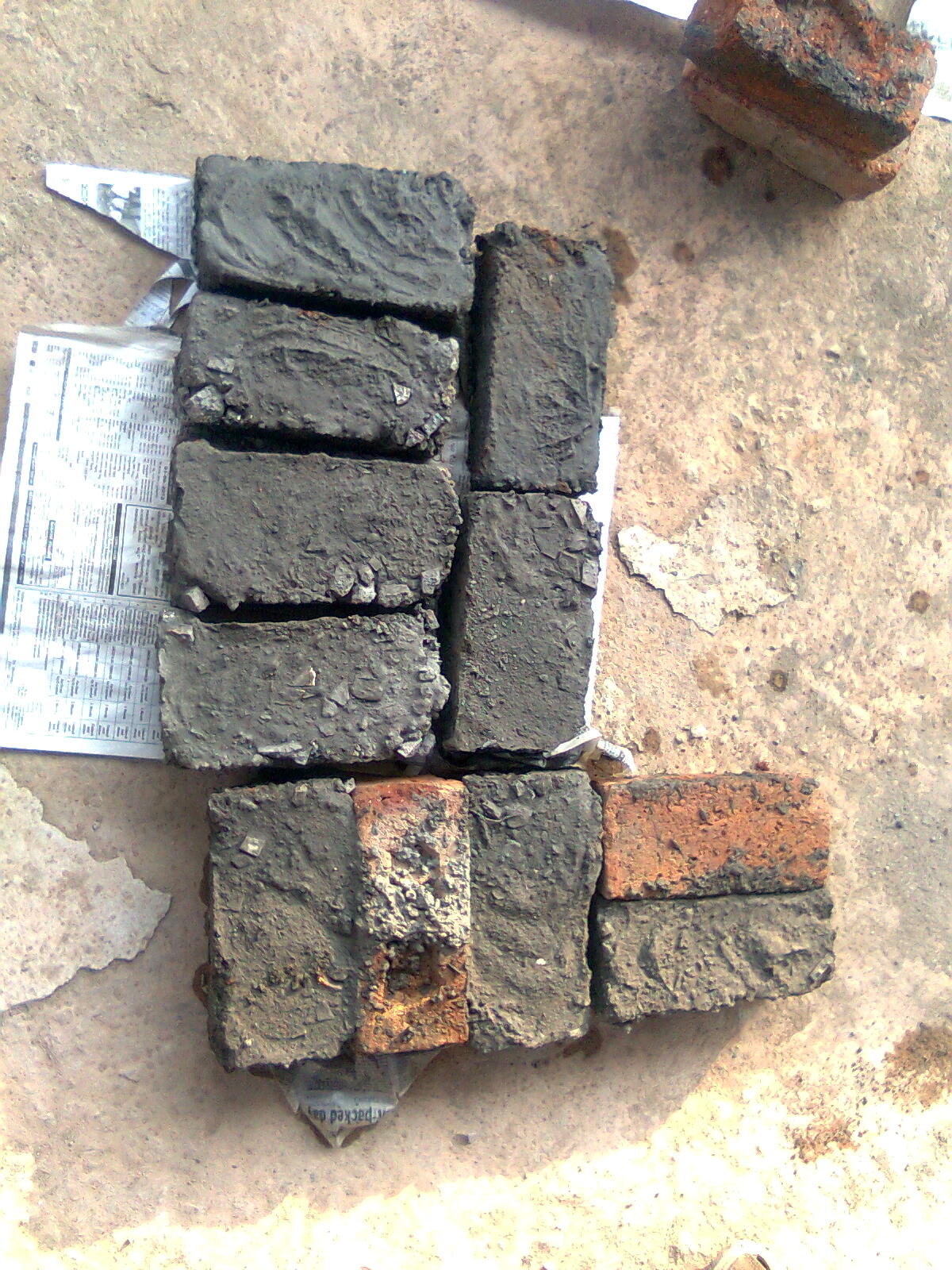
Neelambika wanted to make some blocks and
use them for sitting benches near the parking or canteen areas. In the process
she learnt the
effective usage of waste materials, and came to know the effort and pains of
employees who build the buildings.


Project: Generation of Electricity from Cow Urine
LEADer: Prabhudev
Team Members: Shridhar Hallikeri, Raghvendra Divanji
Location: KLEIT
The team visited a nearby village to know how much urine was wasted and found that 200 litres of urine was wasted each day. They collected urine samples and brought two electrodes, dipping them in beakers containing urine. Connecting the electrodes to the multimeter the team members noted down the voltage reading. After three attempts they were successful in generating the power of about 0.4-0.6 volts, and the team hopes to produce a larger amount of voltage given a large quantity of urine.


Team Members: Shridhar Hallikeri, Raghvendra Divanji
Location: KLEIT
The team visited a nearby village to know how much urine was wasted and found that 200 litres of urine was wasted each day. They collected urine samples and brought two electrodes, dipping them in beakers containing urine. Connecting the electrodes to the multimeter the team members noted down the voltage reading. After three attempts they were successful in generating the power of about 0.4-0.6 volts, and the team hopes to produce a larger amount of voltage given a large quantity of urine.
The main objective of the project is to provide the rural area people
with proper electricity facility, and also to bring the awareness about the
proper utilization of the naturally available urine in the rural area. The
project has been done on the small scale and was able to generate 0.6 volts
from a half litre urine.
Prabhudev: "If considered on the large scale ...the day isn't far when we find no houses without electricity in the rural areas. Thanks to all my team members and my sir Dr.Nagaraj Shetti for his guidance."


Felicitation of Gururaj Deshpande by B.S.Yeddyurappa
 TiE is going to host
a felicitation led by
Shri B.S. Yeddyurappa
Hon'ble Chief Minister of Karnataka
to honour
Shri Gururaj "Desh" Deshpande
for his appointment as Co-Chairman of
U.S. President Barack Obama's
National Advisory Council on Innovation and Entrepreneurship
on 25th August 2010, 6pm at Deshpande Cetre for Social Entrepreneurship.
Project: Useful Ropes out of Used Tyres
 Have you ever thought that used tyres from vehicles could be so useful? Yes, we found out this innovative idea that were used in far villages. Tyres can produce strong and durable ropes with small investment and can generate self employment to many villagers.
This is the project where the main focus is on how the waste material can be used as a product with at most utility. Here we have chosen the waste Tyre of a lorry which is processed into making of ropes for multipurpose use.
One waste tyre can produce maximum of 3000 ropes. The process of converting a tyre into multipurpose wire needs various weapons E.g. Axe, sickle and other household equipments. These bundles of ropes are purchased by the local Rural development societies and sold to the ultimate users. These ropes can be used as alternative to Jute ropes which are commonly used.
The local farmers are the great buyers for these ropes which are widely used for their agricultural activities.
A single used tyre which cost Rs.150/- , can produce as maximum as 3000 ropes. It is further divided into 100 ropes per bundle and same can be sold for Rs.22 per bundle. A tyre can give a profit of Rs.185/- deducting all the expenses for making of ropes.
So this was our project and we expect you to share this idea to others in your villages too. Lets LEAD change. Thanks. LEADer: Geeta Hegde
The local farmers are the great buyers for these ropes which are widely used for their agricultural activities.
A single used tyre which cost Rs.150/- , can produce as maximum as 3000 ropes. It is further divided into 100 ropes per bundle and same can be sold for Rs.22 per bundle. A tyre can give a profit of Rs.185/- deducting all the expenses for making of ropes.
So this was our project and we expect you to share this idea to others in your villages too. Lets LEAD change. Thanks. LEADer: Geeta Hegde

Subscribe to:
Posts (Atom)


