


Showing posts with label Sirsi. Show all posts
Showing posts with label Sirsi. Show all posts
Conservation Camp: An Initiative of LEAD Sirsi Students
A group of students decided to build their consciousness of their surroundings and the value of the natural world in a unique way. LEader Ganapati Hegde (MES College of Commerce, Sirsi) initiated a 2-day camp in Kanmane, for this purpose, which 30 selected students participated in. The camp involved activities such as leadership activities, trucking, sessions on forest conservation and the relationship between nature and humans. A unique element of this camp was the exhibition of Karapatra, the old local newspapers in the time of freedom fighting. The resource person Mr. Shivand Kalve (freelance writer and conservationist) shared with the participants information about these old newspapers, and advised the students on initiatives they can take to save our natural world.


25 Village Children Love Reading, Thanks to This Sirsi LEADer.

Archana's project was showcased during Yuva Summit 2014.

Sirsi LEADer Raises Rs. 70K to Reconstruct School
 One school in a village was in such a poor condition that it needed to be closed down. Since the school had closed down, many of the children had started attending far away schools. Some of the children stopped attending school altogether. LEADer Arun Bhat of MES College of Commerce, Sirsi, wanted to reconstruct this school. He initially approached the school teachers, administrators, and villagers regarding the problems. He then approached the Gram Panchayath and requested their support. Arun successfully raised more than Rs. 70,000 worth of building materials from the local community and government. He worked with the community to help rebuild the school so that he could provide an adequate learning environment for the children. Because of Arun's project, 15 children are now attending this school regularly.
 Arun's project was showcased during Yuva Summit 2014.
Gram Panchayath Sanctions Rs. 90K for Village Footbridge
 LEADer Ajay Hegde of MES College of Commerce, Sirsi, comes from a village that had no proper footbridge. The lack of footbridge was causing many transportation issues for the villagers, as they were not easily able to travel to other surrounding areas. After identifying the problem, Ajay took it upon himself to solve it. He approached all of the villagers and requested for their support to write a letter to the Gram Panchayath asking them to construct a foot bridge in the village. While the villagers were supportive of Ajay's initiative, the Gram Panchayath required more convincing. After rigorous followup, the Gram Panchayath agreed to sanction Rs. 90,000 for the construction of a footbridge.
 Ajay's project was showcased during Yuva Summit 2014.
SIrsi LEADer Improve Improves Academic Performace of Village Children
 Tuition classes are almost necessary for children to receive a good education, but tuition classes are often too expensive for many families to afford. LEADer Anuradha from Govt. First Grade College, Sirsi, also winner of the 2013 Yuva Summit Best Leader award, identified 10 village students and held tuition classes for them. Since attending Anuradha's regular tuition classes over the past 5 months, the students have increased their scores in academics.
 Sirsi LEADer Helps Families Through Sustainable Agriculture Practices

In villages near Sirsi, agriculture dominates the local economy and makes up the majority of people's livelihood. LEADer Seetaram from MES College of Commerce, Sirsi, recognized the importance of sustainable agriculture, and decided to implement local solutions. He trained two families about effective animal husbandry. Specifically, he taught the families how to grow more grass for cows in smaller areas. Additionally, he taught farmers about vermi compost. Finally, he trained the farmers and their families about how to accurately use pesticides. These farmers are now regularly practicing these sustainable agricultural techniques, which is saving them money and therefore adding to their income.

Sirsi LEADer Promotes Organic Pesticides to Promote Livelihoods and Health
 Pests pose a serious threat to agriculture. A way to combat these pests is through using pesticides, but consuming agricultural products treated with chemical-based pesticides can be harmful for health. With the aim to help farmers yield more crops to increase their income and to take care of the health of consumers, LEADer Raghav Hegde of MES College of Commerce, Sirsi, supplied 10 farmers with organic pesticides and trained the farmers how to apply these pesticides. Now, these farmers are protecting their livelihoods, as well as the health of their consumers.
My Story: Sandesh Bhat
Sandesh Bhat
(MES College of Commerce, Sirsi)
(MES College of Commerce, Sirsi)

Since
joining LEAD, I have completed over 30 projects, and I have ideas to do
even more. I have devoted most of my projects to helping rural people
by helping them improve their agricultural practices. Many rural people
suffer from financial problems. I wanted to inspire others to help rural
people. My projects range from encouraging a single family to
incorporate mixed crops in order to increase their family’s income, to
organizing a major workshop for hundreds of local
farmers to teach them more effective agricultural techniques. So far,
my projects have benefited over 600 people in and around my community.
Although
I have successfully completed 30 projects, I have also encountered many
challenges along the way. Many of my projects required additional
fundraising. I turned to the public to raise these funds so that I could
complete his various projects, but initially, the public was not
supportive. I worked tirelessly to explain to the public about the
objectives and benefits of my projects. With each new completed project,
though, approaching people and getting their support became easier.
From my completed projects, I have fundraised a total of over Rs.
51,000.
Prior
to joining LEAD, I had no knowledge about leadership. But now, I know
what leadership means. LEAD has helped me develop essential leadership
skills such as communicating with people, convincing people, identifying
problems and creating and implementing solutions, and how to
effectively use resources. LEAD has also exposed me to some of society’s biggest problems and helped me expand my social networks.
Sirsi LEADer Teaches Environmental Awareness to 50 Villagers
 LEADer Aravind Hegde from MES College of Commerce, Sirsi, conducted "Vanmahotsava" ("Go Green Revolution"), a program to create environmental awareness in his village, Jaddigadde. After convincing the forestry department to donate over 80 samplings, he gathered 50 villagers and encouraged them to plant the saplings in their home. Additionally, he taught the villagers about natural rainwater harvesting, and several villagers are now implementing this technique.
 LEADer Arranges for Hospital Notice Boards Throughout Sirsi
 BVBCET LEADer Akshay felt that the people of Sirsi should have more
knowledge about the medical options available to them. He arranged for
the placement of a notice boards in different public places throughout
Sirsi displaying all Sirsi hospitals and their information. Now, the
people of Sirsi have a clear directory of where to go to seek medical
help.
BVBCET LEADer Akshay felt that the people of Sirsi should have more
knowledge about the medical options available to them. He arranged for
the placement of a notice boards in different public places throughout
Sirsi displaying all Sirsi hospitals and their information. Now, the
people of Sirsi have a clear directory of where to go to seek medical
help.
Sirsi LEADer Provides 60 Books to Help Rural Students
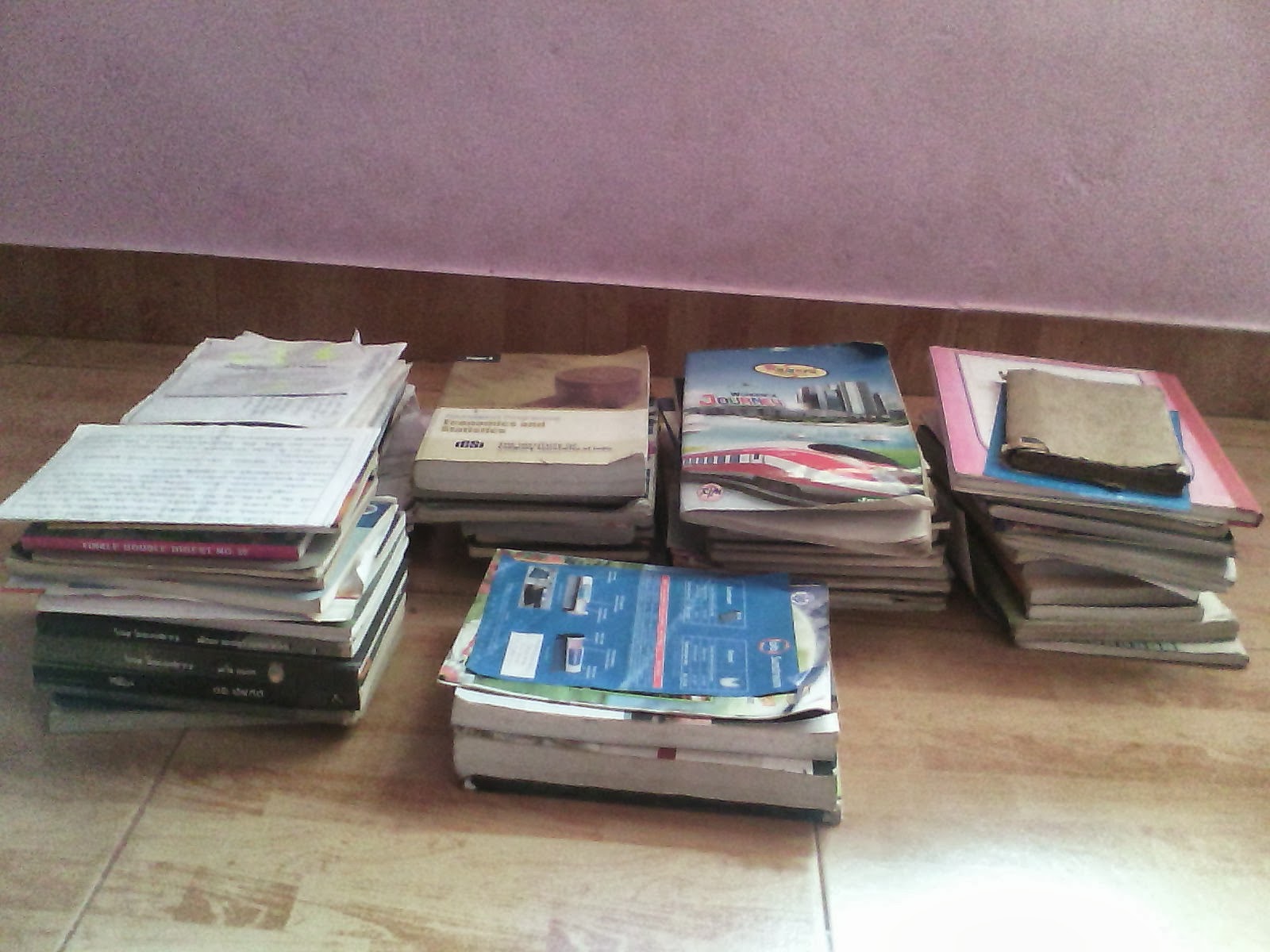 Books, while necessary for education, can be very expensive. Many
students today find themselves incapable of affording costly books, and
their education therefore suffers. LEADer Mohit Hegde from MES College
of Commerce, Sirsi, conducted a book bank to help students from Koligi.
He was able to collect and distribute over 60 books for the rural
students.
Books, while necessary for education, can be very expensive. Many
students today find themselves incapable of affording costly books, and
their education therefore suffers. LEADer Mohit Hegde from MES College
of Commerce, Sirsi, conducted a book bank to help students from Koligi.
He was able to collect and distribute over 60 books for the rural
students. 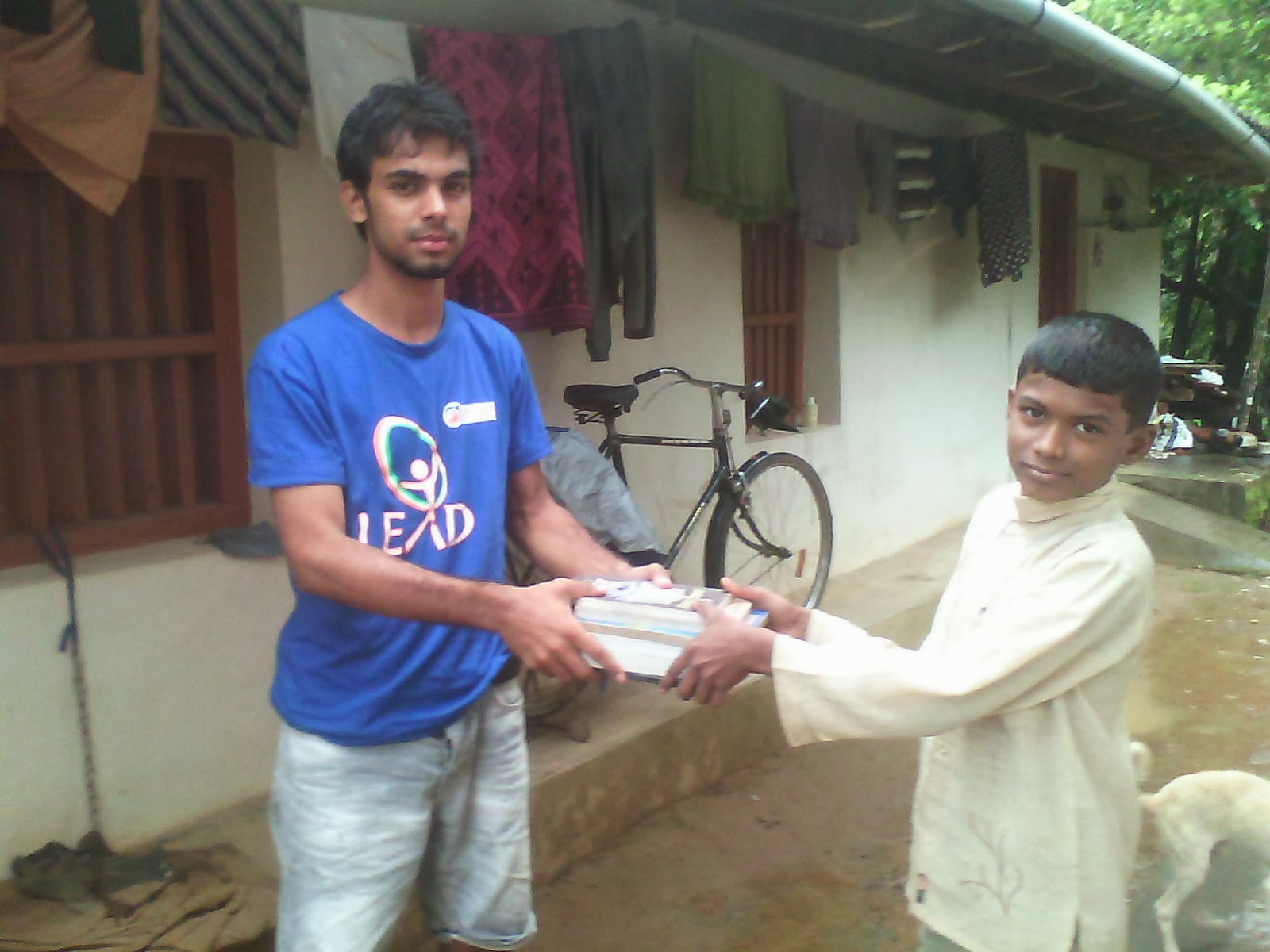
Sirsi LEADer Builds Low-Cost Bridge; Helps 30 Village Families
 LEADer Shivaprasad Hegde from MES College of Commerce, Sirsi, identified a need for a bridge in his village of Irgoppa. The construction of a bridge, however, can require a great deal of time and money. Shivaprasad innovatively devised a low-cost bridge for his village by using only soil and tree trunks. Additionally, the construction of the bridge required minimum human resources. Shivaprasad's bridge is helping over 30 village families.
My Story: Anuradha Bandari
Anuradha Bandari
(Govt First Grade College, Sirsi)
(Govt First Grade College, Sirsi)
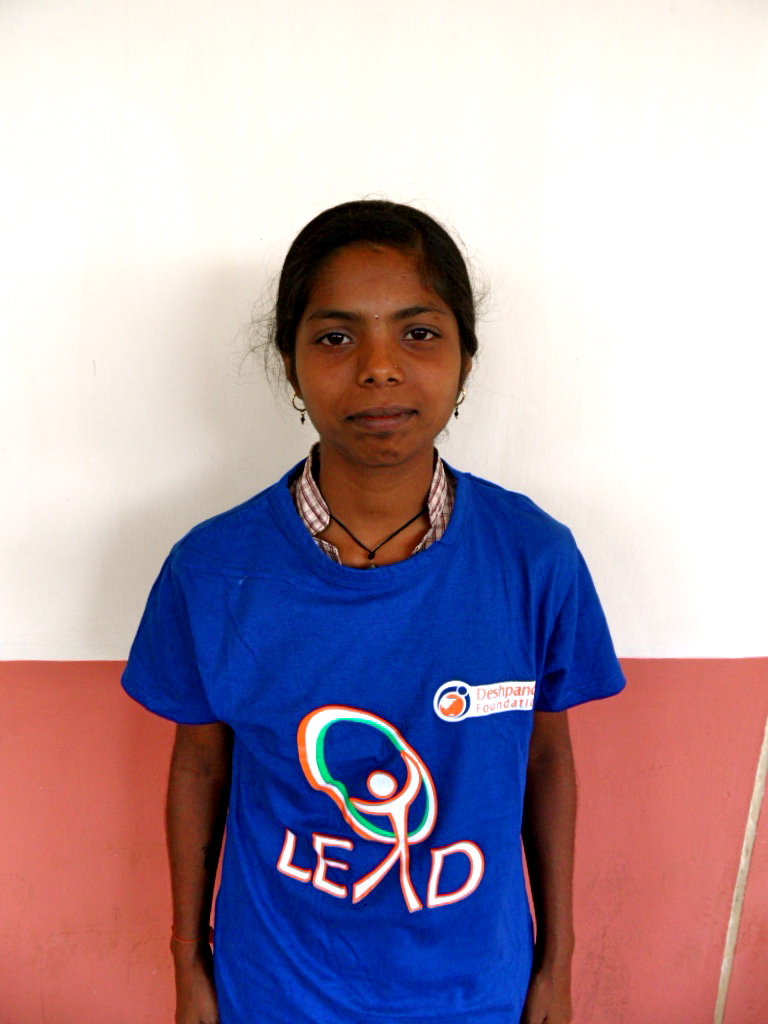
“I believe that true happiness is the ability to bring
smiles to others’ faces.”
I believe
that our country has everything that it needs-we’re just not using what we have
in the right way.Still, many people
today are working hard to create new things.But if everyone works to create new things, there is no meaning.For this reason, I have dedicated my work to
making improvements to existing things.
My village, Bommanalli, near Sirsi, had a water problem. During the hotter seasons, our people suffered from water shortages. I wanted my village to have a water tank to prevent this problem from happening in the future. I knew that while our village could not afford to fund the construction of a water tank, the Gram Panchayath could. The Gram Panchayath sanctions money for these kinds of things, but the money was not being properly utilized. I wanted to use this money to help my village.
It was very
difficult to approach the Gram Panchayath because they did not know who I
was. They did not take me
seriously. They questioned me…questions
such as “Who are you?” and “Why should we give you the money?”. I became angry because they were not
listening to me, but I never lost my confidence. I kept approaching them. They eventually became frustrated with me,
but I did not care. I wanted to create
change, and I wanted other people to look at my village as an example of
possibility and opportunity.
My
perseverance made the Gram Panchayath to sanction Rs. 2 lakh for the
construction of a water tank in my village.
My project actually turned out to be more successful than I had
initially planned for; During my meetings with the Gram Panchayath, it also
became known that my village did not have any streetlights. So, in addition to funding the water tank,
the Gram Panchayath funded Rs. 34,000 to construct streetlights in my
village.
This project
taught me many important lessons. I
learned how to communicate with different types of people. Not everyone thinks the same way, and we have
to adjust our approach for each individual in order for him/her to
understand. When we do not understand
each other, that poses a big problem.
When we can understand each other, so many solutions to big problems
become available.
When I got an award from Ratan Tata at Yuva Summit 2013, that was a huge moment for me. After that, I kept getting so many ideas, and I have since completed many projects.

I believe that
true happiness is the ability to bring smiles to others’ faces. This is the main value that I plan to instill
throughout my life Whatever I end up doing, I will create happiness for myself
by giving others a reason to smile. I
want to help society. I want to be a
voice for the people. From my work with
LEAD, I have learned the value of understanding, and I want others to also
learn the same lessons.
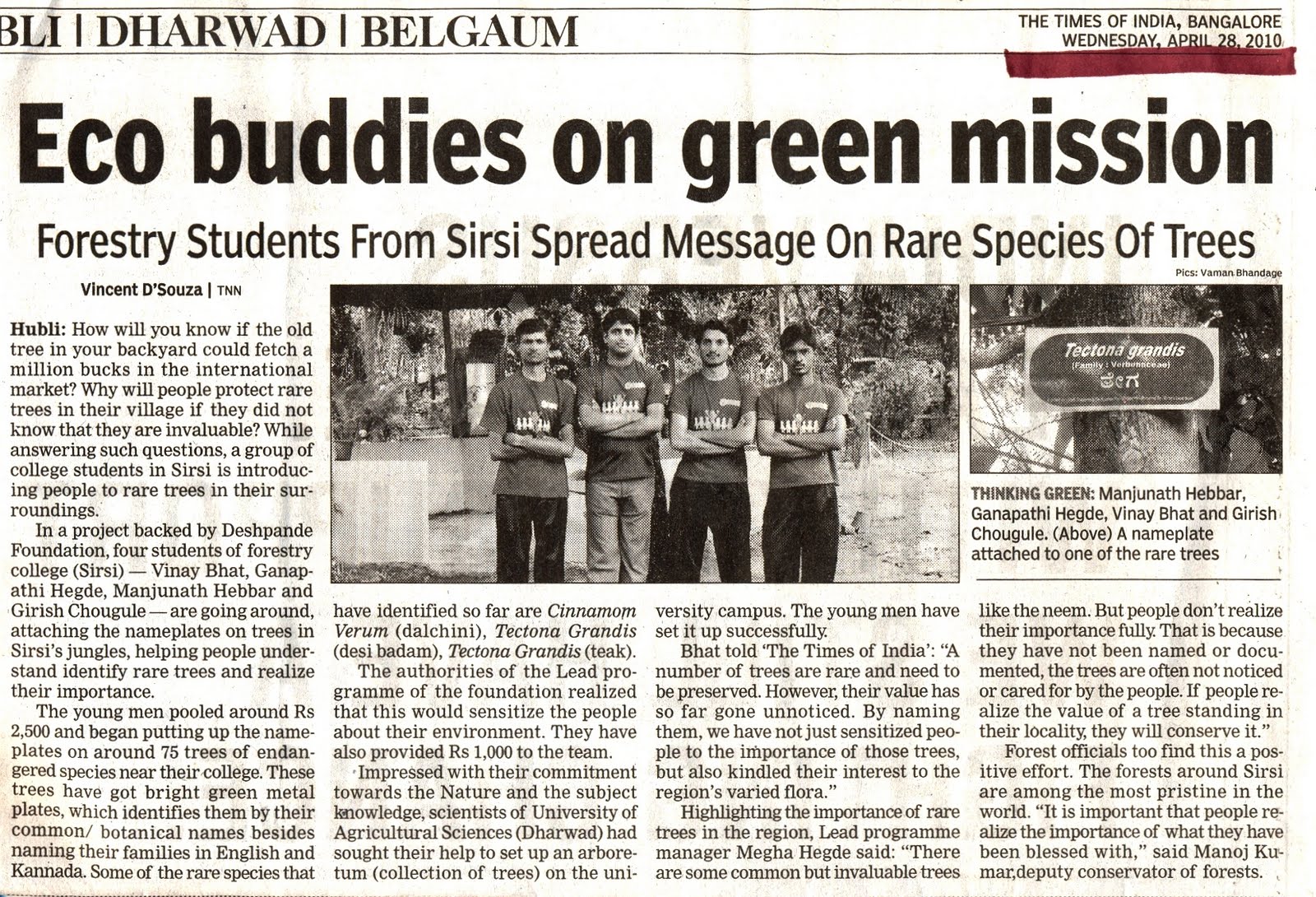
Forestry students from Sirsi spread message on rare species of trees
How would you know if the old tree in your backyard could fetch a million bucks in the international market?Why would people protect rare trees in their village if they did not know that they are invaluable? While answering such questions, a group of college students (Vinay Bhat, Ganapathi Hegde, Manjunath Hebber and Girish Chougule) from the Forestry College in Sirsi is introducing people to rare trees in their surroundings.

Project: Best out of Waste
'Best' LEADer Winner 2010: Geeta Hegde
Project: Best out of Waste
Government First Grade College, Sirsi
The Idea: After vehicles use tires, is there another use of them? Yes, there is. These LEADers found an innovative idea to make use of these old tires. Tires can produce strong and durable ropes with a small investment and can generate self-employment for many villagers. One used tire can produce a maximum of 3000 ropes. A single tire usually costs Rs. 150, but can produce a maximum of Rs. 3000 as ropes.
The Activity: The LEAD team trained poor people how to extract ropes, so that they could do this as their livelihood activity. Before, many of these people didn’t have any means of living. Now, with this new method, they can find a way to make a living.
The Impact: Now, tires are no longer being wasted in this area. The poor people have a livelihood and are extracting ropes for a living. This project was such a success, that the team is getting multiple calls to come train people to do this type of work. The team hopes that this project can be a model for the rest of the state.
Project: The Art of Banking
 Title: Banking literacy
Team leader: Shweta Hegde
College: MES college
Place: Shiraguni, Sirsi
Date: 10/12/2010

Shweta, a commerce student herself, knows the importance of banking, especially at a young age where the idea of saving can be incorporated easily. She decided to educate a few 10th graders in the local government school about banking. The lecture included why students should open bank accounts, the advantages of ATM cards and transactions using cheques. Shweta said, “well, these students will be leaving for bigger cities for further education and it will be so much easier for them if they know how to transact in a bank."
 Shweta thought the task was challenging, as the bank manager declined her offer, saying that they were out of forms. Shweta convinced him and obtained the forms from the syndicate bank. By the end of the project, 25 out of 50 students had opened bank accounts in SSLC. Out of 25 students, 10 students have deposited cash. Some of them deposited 100/-, while some some of them 500/-. Other students opened their account with zero balance.
This project has helped Shweta realize that she can use her knowledge for the betterment of students and society. She has also learned the skill of communicating and convincing people.
Project: Yoga for Health!
 Team leader: Pavitra Hegde
Date : 31 /10/2010
Place: Battagere, Sirsi
College: MES Commerce College
 Yoga is a remedy for many problems. Having seen that women need exercise to keep fit, but lack the time for it, Pavitra chose to teach 25 daily wage women workers the art of yoga for a period of 8 days. These women have hard physical jobs, suffer from a lack of concentration, and are subject to several ailments.
Pavitra said, “They are suffering from so many ailments like fevers and headaches. These women are very poor. They are not able to pay the doctor's high fees for medical treatment.” Having learnt yoga, she felt that she should give back to the society.
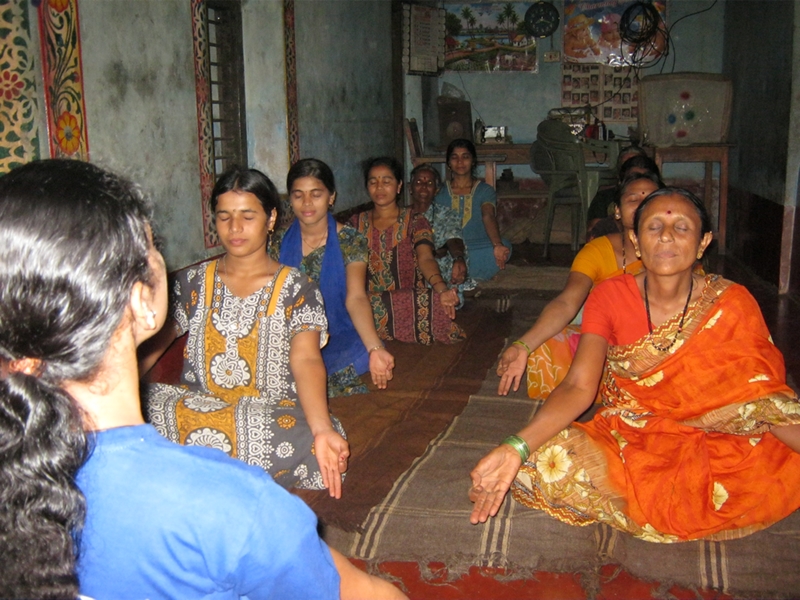 These women practiced yoga for 2 months and have since become more active and healthy. They have been able to invest some time in themselves and have cured themselves. The experience has taught Pavitra the advantages of taking up an initiative, and come out of it more confident and with a better application for her skills.
API CULTURE
BUSY AS A BEE!!
 Team Leader: Sindhoor Hegde
 Members:Vidya Hegde, Sandeep Hegde, Ravi Bhat
Project Date: January 21, 2011
Place of Implementation: Yelugar, Benagi, Sankadmane and Mashigadde villages in Sirsi
College : MES Commerce college Sirsi
 Team leader Sindhoor Hegde identifies with the saying "busy as a bee". Along with his team, he introduced 32 families of Yelugar, Benagi, Sankadmane and Mashigadde villages in Sirsi to beekeeping. Apiculture, or beekeeping, is the maintenance of a colony of bees to earn a profit. Sindhoor believes that this venture can be very profitable for those who wish to develop it as a profession. With that in mind, Sindhoor and his team distributed 32 boxes of bees across the 4 villages. The uniqueness of the project came from the introduction of different honey flavours, like pineapple, sunflower, beetle nut and wheat honey.
  Many farmers, like Nagraj Hegde, Umesh Bhat, Prshant Hegde, Neelkanth Hegde and Ramchandra Hegde, have benefitted from this project. The response to the project has been overwhelming and the team has been receiving orders for the same. Sindhoor has developed an expertise in the area and has been guiding the villagers about the cultivation and maintenance of bees, the extraction of flavoured honey and other skills needed to be successful.
  A total of 600 Rs was funded by LEAD while another 1500 was raised by the team. Funds were used to meet the requirements of project, such as arranging transport of bees and procuring bee boxes. When asked, Sindhoor said “although transportation of the bees is risky, we used cars and bikes, it was good being a part of an important venture which has created a way for many villagers to earn their livelihood and extra income. Personally this is an entrepreneurial venture that has added to my confidence.”
Through this project Sindhoor and team have established how complex and difficult projects can be undertaken with a little bit of team work and innovation.
Project: Issuing Identity Cards to Government School Students
 Anupama is a student from MES Commerce College. He and his team members wanted to make some improvements to their old high school: Kalleshwar Govt. High School in Ankola taluk, a typical rural area. "At first, my primary aim was to rearrange the library, but after speaking with the teachers we decided the students needed chest cards (Student Identity Card). Thus, with the support of LEAD I started that project right away.
The main objective to take on this project was to fill the gap of discrimination between private and government schools. We can see private schools have all kind of modern facilities for the students whereas government school students lack all this. Identity card is the one most necessary requirement for students as it gives all the information about them and sometimes helps students in emergency cases.


I met with all the students and told them the importance of the identity cards and collected Rs 10 from all 90 of them. I took photos of all the students with the help of a teacher of that school. At the same time we also collected the students' address, parents' name, and contact details.
Each card’s cost came out to be Rs. 15. We were able to provide the identity cards to 90 students.
Even though I faced many difficulties, I'm happy to have completed my project successfully with 90 cards issued. We are so thankful to LEAD for giving us this valuable opportunity and amazing experience."
LEADer: Anupama
College: MES Commerce College
I met with all the students and told them the importance of the identity cards and collected Rs 10 from all 90 of them. I took photos of all the students with the help of a teacher of that school. At the same time we also collected the students' address, parents' name, and contact details.
Each card’s cost came out to be Rs. 15. We were able to provide the identity cards to 90 students.
Even though I faced many difficulties, I'm happy to have completed my project successfully with 90 cards issued. We are so thankful to LEAD for giving us this valuable opportunity and amazing experience."
LEADer: Anupama
College: MES Commerce College

Project: Accounts Training to SHG Members
LEADer: Sandeep Hegde
Project Implementation Place: Sirsgaw and Karoor Village near Sirsi
Project Implementation Place: Sirsgaw and Karoor Village near Sirsi
 The LEADers from MES Sirsi identified this problem faced by SHG women of "Stri Shakti Sangha" and "Swa Sahay Sangha" in Sirsgaw in Karoor village. "Stri Shakti Sangha" is a group in a village which is supported by government of Karnataka. The government provides funds of Rs. 10000 without interest to the group. SHG women maintain their accounts with the help of a school teacher. Since the SHG ladies were illiterate they wouldnt' know that they were being cheated by the school teacher. LEADers took this initiative to train those ladies. The LEADers visited the village 6 to 7 times to train the women. They successfully trained 50 women so that they are able to deal with their financial transactions themselves.


Subscribe to:
Posts (Atom)


